






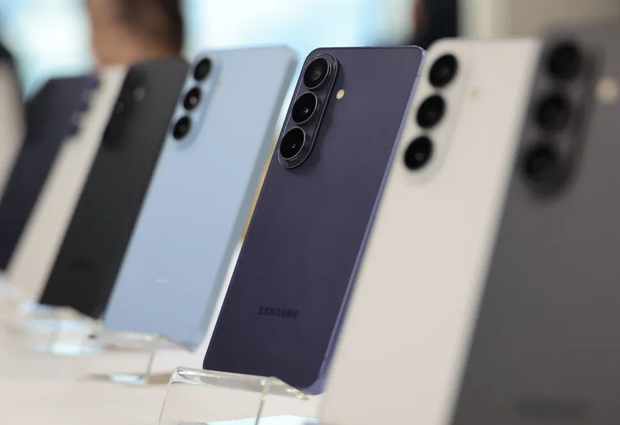
Samsung Electronics has raised prices for its flagship Galaxy S26 smartphone lineup by about 150,000 won ($105), moving to protect margins after a surge in memory chip prices sharply eroded profitability in its handset business. The company plans to pair the price increases with expanded sales of premium models that carry relatively lighter cost burdens, including the Galaxy Z8 foldable and next year's Galaxy S27 series.
Galaxy S26 models have been selling at prices 149,600 won higher than before as of the 1st, based on 256GB versions, Samsung Electronics said. The base model rose to 1,403,600 won from 1,254,000 won, the Plus model to 1,601,600 won from 1,452,000 won, and the Ultra model to 1,947,000 won from 1,797,400 won.
Prices climbed by similar margins in overseas markets, with each U.S. model rising $100 (about 142,000 won). Higher-capacity models saw steeper increases. The 1TB version of the Galaxy S26 Ultra now sells for 2,821,500 won in South Korea, about 270,000 won more than before.
The increases follow a spike in memory chip prices, the largest single cost component in a smartphone, as surging artificial intelligence demand created shortages. Samsung Electronics' Mobile eXperience division posted its first-ever quarterly loss of 700 billion won in the second quarter of this year, and the shortfall is expected to widen in the second half as profitability deteriorates further. The price increases are intended to defend margins.
Average DRAM prices stood at $26 at the end of September, double the $13 level in March, when the Galaxy S26 launched, according to market research firm DRAMeXchange. Counterpoint Research estimated that memory's share of production costs for premium smartphones rose 16 percentage points over the same period, to 43% from 27%. Apple also raised prices on older models including the iPhone 16 and iPhone 17 by $100 each last month, timed to the launch of the iPhone 18 Pro.


