






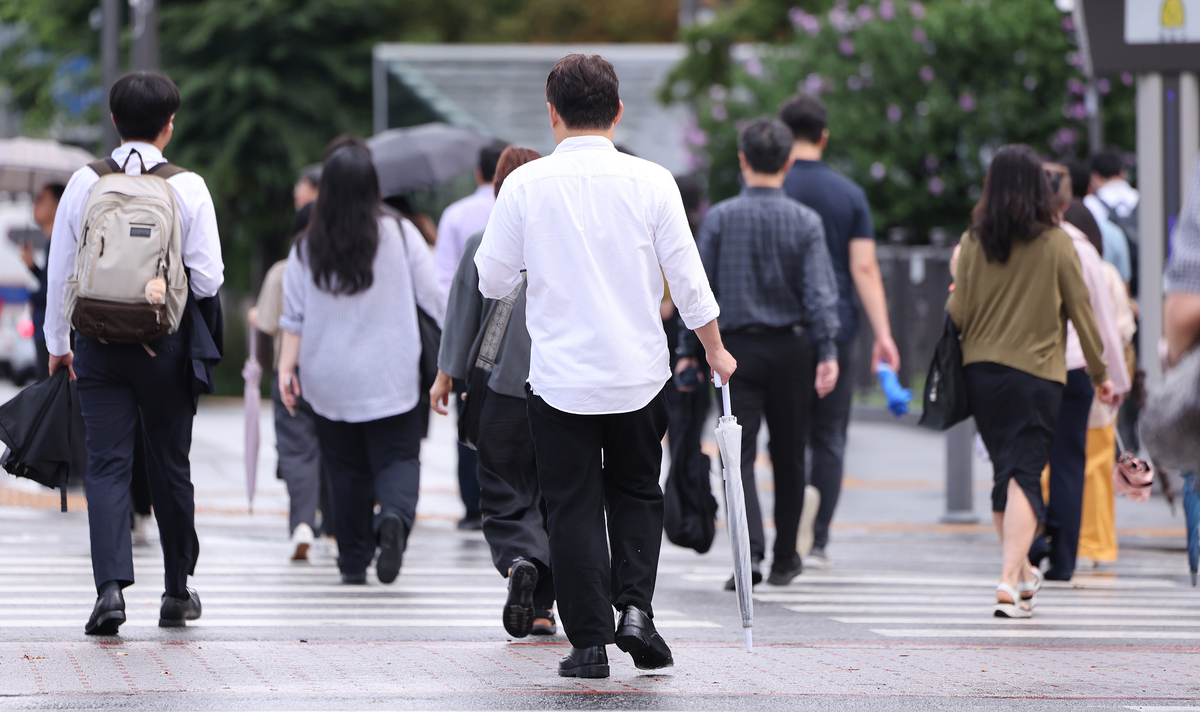
Six in 10 Seoul residents in their early 50s are caring for aging parents while still supporting their children, according to a new survey.
Among Seoul residents aged 40 to 64, 88.1% were supporting either a parent or a child, according to the first results of the Seoul Middle-Aged Quality of Life Index, developed jointly by Kye Bong-oh, a professor of sociology at Kookmin University, and the Seoul50plus Foundation, released on Sept. 16.
The share of those supporting both parents and children at the same time — the so-called sandwich generation — reached 48.4%, and climbed to 62.1% among those aged 50 to 54. The survey covered 2,058 Seoul residents aged 40 to 64 in June.
Employment status was not what separated the satisfied from the dissatisfied. Average life satisfaction stood at 3.18 out of 5, with a gap of just 0.06 point between those with jobs and those without. Housing tenure, by contrast, produced gaps of up to 0.69 point, income level 0.65 point and marital status 0.57 point.
Those living in homes they own scored 3.31, while those renting on a monthly basis with no deposit scored 2.62. The gap between married respondents (3.33) and unmarried respondents (2.76) was also pronounced. Monthly household income for middle-aged Seoul residents averaged 6.617 million won ($4,800), yet only 20.9% said they were satisfied with their income. Even in the top income quartile, the satisfaction rate stayed at about 21%.
Policy is not keeping pace with demand. While 63.9% said programs for middle-aged residents should be expanded, only 22.6% said they actually felt the benefit of existing policies — a gap of 41.3 percentage points.
Asked what they needed most, 77.7% pointed to placement in community service jobs, followed by exercise and physical activity programs designed for middle-aged adults (75.7%), job training and re-employment counseling (75.6%), and education in artificial intelligence and digital skills (73.3%).
Speakers at an accompanying forum argued that the employment problem facing middle-aged workers should be treated not simply as a shortage of jobs but as a mismatch between their careers and what the market demands.
Experts recommended identifying suitable roles across seven fields, including safety and firefighting, information technology and telecommunications, and AI and data, and strengthening job support within residents' own neighborhoods. Seoul Mayor Oh Se-hoon said the city would expand its job academies for middle-aged residents, now operating at five sites, to all 25 of the capital's districts.


